Boogiepop Phantom
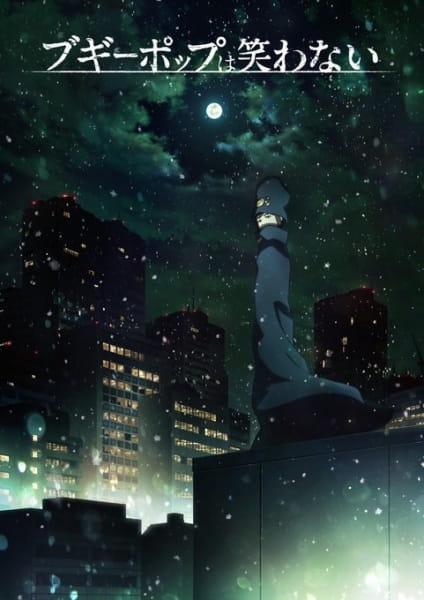
ブギーポップは笑わない Boogiepop Phantom (Boogiepop wa Warawanai)
- Avant Garde
- Drama
- Horror
- Mystery
- Supernatural
- Suspense
- Psychological
- Episodes
- 12
- Duration
- 24 min per ep
- Aired
- Jan 5, 2000 to Mar 22, 2000
- Status
- Finished Airing
Synopsis
Boogiepop is spoken of as a shinigami who moves unseen, a presence blamed for deaths that no one can explain. Five years after a wave of brutal murders left the public shaken—some of them pinned on that rumored “death god” by frightened students—unease begins to surface again.
As strange incidents start to touch the lives of those at Hijiridani High School and Shinyo Academy, the old whispers return with new urgency. Whether the tales of Boogiepop are only fragments of the truth, or signs of something far more perilous hiding beneath everyday life, becomes increasingly difficult to ignore.
Otaku Consensus
Boogiepop Phantom remains the abrasive 2000 Madhouse take on Kouhei Kadono's novels: Takashi Watanabe's direction, Sadayuki Murai's fractured composition, and the series' unnerving sound design give its denpa horror a texture that still separates it from cleaner mystery anime. Its best material is the anthology-like middle stretch, where isolated student perspectives become psychological case files; the recurring complaint is that the ending and adaptation gaps leave too many essential connections outside the anime itself.
Why You Should Watch
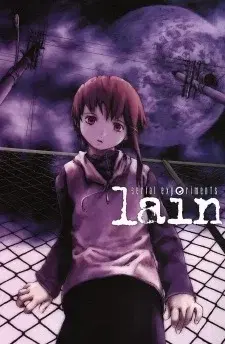
Watch Boogiepop Phantom if you want psychological horror that behaves like a corrupted memory file rather than a puzzle box with labeled pieces. It scratches the same itch as Serial Experiments Lain and the more inward-facing parts of Evangelion, but with a colder urban-fantasy edge: muted Madhouse visuals, oppressive silence, sudden sound cues, and episodes that treat trauma, rumor, identity, and social pressure as supernatural architecture. This is for viewers who like achronological storytelling, repeated scenes from incompatible viewpoints, and atmosphere that forces active reconstruction. It is not built for anyone who needs a clean chain of causes, a dominant protagonist in every episode, or a comforting finale; its power comes from disorientation becoming the viewing method.
Key Characters
- BBoogiepop(VA: Kaori Shimizu)
Boogiepop fascinates because the character functions less like a conventional lead than a mythic interruption, appearing with the detachment of an urban legend that may be more rational than the humans fearing it.
- BBoogiepop Phantom(VA: Mayumi Asano)
Boogiepop Phantom gives the series one of its strangest mirror images, sharpening the show's interest in doubles, dissociation, and the gap between identity and performance.
- NNagi Kirima(VA: Yuu Asakawa)
Nagi Kirima is the kind of secondary presence viewers remember because she moves through the story like a noir investigator dropped into a supernatural school rumor.
- KKazuko Suema(VA: Kyou Nagasawa)
Kazuko Suema grounds the series' abstract dread through curiosity and analysis, making her a key figure for viewers trying to map the show's scattered psychological evidence.
What Makes It Stand Out
- 1
Madhouse gives the 12-episode series a deliberately subdued visual identity, with dark, drained color work that contemporary critics often place near Serial Experiments Lain and Haibane Renmei rather than brighter late-90s school anime.
- 2
The structure is aggressively achronological and episodic: episodes revisit overlapping incidents through different students' viewpoints, rewarding note-taking more than passive mystery consumption.
- 3
Sound design is one of the show's most consistently praised elements, with fan and critic discussion singling out its oppressive audio choices as central to the horror rather than decorative background work.
- 4
Shigeyuki Suga's character designs adapt Kouji Ogata's original look into a sharper early-Madhouse style, a contrast later reviewers have specifically preferred over the softer faces of the 2019 Boogiepop adaptation.
- 5
The anime leans harder into horror than many discussions of the broader Boogiepop novels, using denpa unease, urban-fantasy ambiguity, and psychological fragmentation as its dominant mode.
Fun Facts & Trivia
- Fun fact 1
- Boogiepop Phantom aired from January 5 to March 22, 2000, placing it directly in the post-Lain wave of TV anime experimenting with fragmented narration and psychological genre hybrids.
- Fun fact 2
- The series is based on Kouhei Kadono's Boogiepop novels, with Kouji Ogata credited for the original character designs and Shigeyuki Suga handling the anime character designs.
- Fun fact 3
- Kaori Shimizu voices both Boogiepop and Touka Miyashita, a casting detail that quietly reinforces the show's fixation on split identity and unstable personae.
- Fun fact 4
- Takashi Watanabe directed the anime, Kenji Yasuda served as assistant director, and Sadayuki Murai handled series composition, giving the adaptation a staff structure built around controlling a non-linear narrative.
- Fun fact 5
- AniList's highest-weighted tags for the series include Denpa, Urban Fantasy, Achronological Order, and Philosophy, which accurately signal why the show has a modest mainstream score but a persistent cult audience.
Studios
- Madhouse