The Take
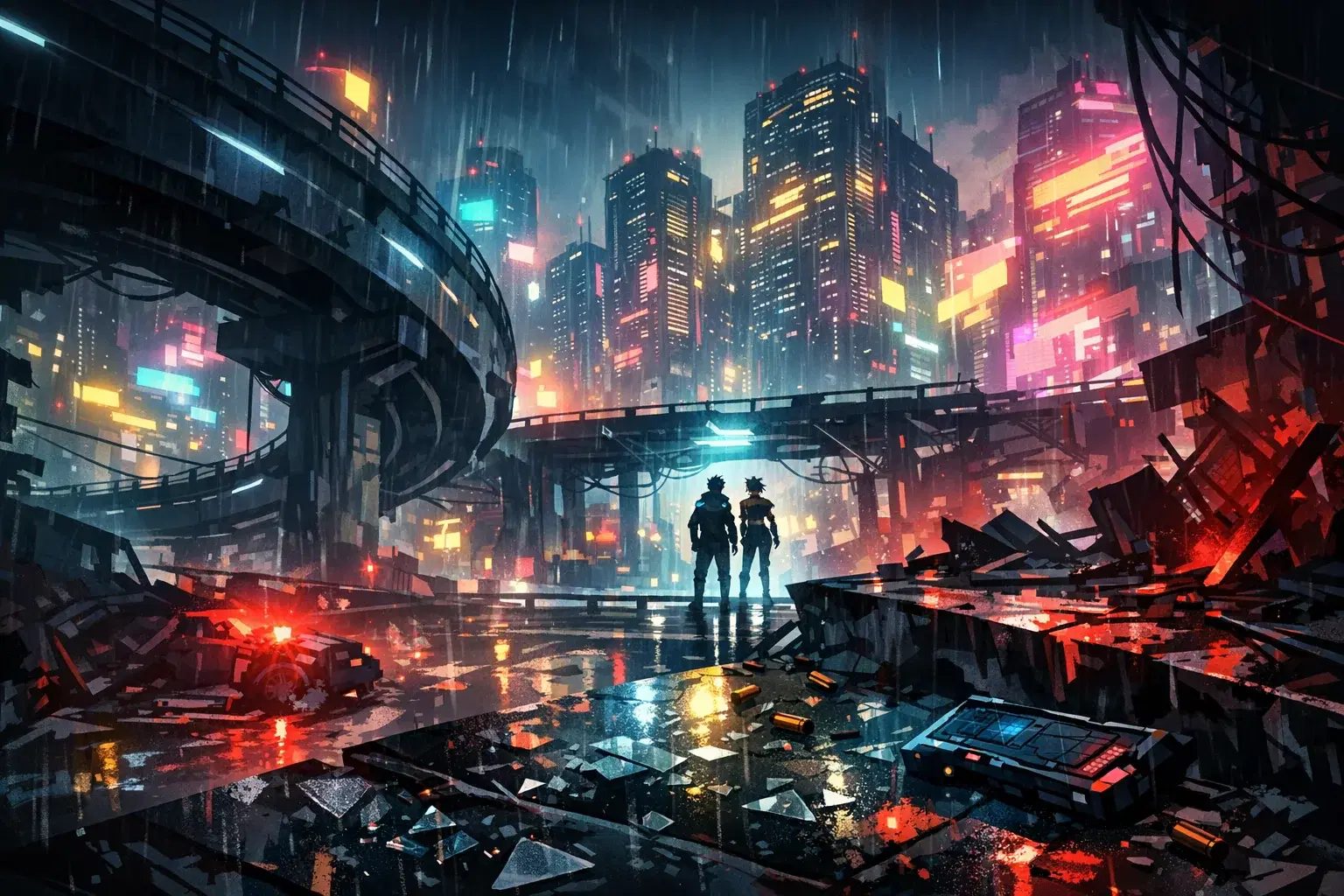
Cyberpunk: Edgerunners 2 is officially headed to Netflix on October 20, 2026, with a new trailer out of Anime NYC and a fresh 10-episode standalone story set in Night City. That is exciting news. It is also exactly the kind of announcement anime fans should greet with one eyebrow raised.
Here is the blunt version: Cyberpunk: Edgerunners did not need a sequel. Not because Night City is exhausted, not because Studio TRIGGER should never return to that universe, and not because more stylish cyberpunk tragedy is inherently a bad thing. It did not need a sequel because the original worked precisely because it ended like a bullet. It was short, brutal, romantic, and final. Its identity was inseparable from inevitability: the city eats people, dreams become chrome, and love does not save you so much as make the fall beautiful.
So the better question is not “Will Cyberpunk: Edgerunners 2 be good?” It might be. The better question is whether the anime industry, streaming platforms, and fandom have become too quick to treat every great ending as an unfinished business opportunity.
The Evidence
The facts are straightforward. CD PROJEKT RED announced that Cyberpunk: Edgerunners 2 will premiere exclusively on Netflix on October 20, 2026. The new series is described not as a direct continuation of David Martinez’s story, but as another 10-episode standalone tale in Night City, this time centered on revenge and redemption. Studio TRIGGER is returning, CD PROJEKT RED is again involved, and the creative team includes director Kai Ikarashi, lead character designer Kanno Ichigo, and returning story figure Bartosz Sztybor.
That framing matters. Officially, the sequel is not trying to undo the ending of Cyberpunk: Edgerunners. In fact, CD PROJEKT RED’s earlier messaging was almost aggressively clear: David is dead, Night City lives on. That is the smart way to do this. If the brand must continue, anthology is the least destructive format. It protects the original’s finality while admitting the commercial truth: after Cyberpunk: Edgerunners won Anime of the Year at the 2023 Crunchyroll Anime Awards and helped rehabilitate the broader Cyberpunk franchise’s public image, more anime was probably inevitable.
But inevitability is not the same as artistic necessity.
The original Cyberpunk: Edgerunners was marketed as a standalone 10-episode story, and it felt like one. Its pacing had almost no padding. David’s rise was also his collapse. Lucy’s dream was not a sequel hook; it was a wound. The final episode did not ask, “What happens next?” It asked viewers to sit with the cost of everything that already happened. That is rare in a market where success often triggers extension, expansion, spin-off, recap, movie, sequel, and legacy revival.
Anime has plenty of examples of works that understood the power of stopping. Cowboy Bebop remains iconic not because it explained every corner of its world, but because it knew when myth was more powerful than lore. Death Note, whatever debates fans have about its second half, still lands because it reaches an actual conclusion rather than indefinitely circling its premise. Your Lie in April would be actively weakened by trying to keep its emotional machinery running after its catharsis. Angel Beats! is messy, rushed, and beloved partly because it burns through its ideas with the urgency of a final confession. Erased is not improved by imagining another mystery tacked onto its ending. A Silent Voice and Look Back also demonstrate the same principle in film form: some stories become stronger because they are finite.
This is not anti-sequel purism. Some anime absolutely earn continuation. Attack on Titan needed Attack on Titan Season 2, Attack on Titan Season 3, Attack on Titan Season 3 Part 2, and Attack on Titan: Final Season because its central mystery, political structure, and character arcs were designed as a long fuse. Fullmetal Alchemist: Brotherhood is satisfying because it has the architecture of a complete epic, not because it stops early. Code Geass: Lelouch of the Rebellion and Code Geass: Lelouch of the Rebellion R2 are a useful comparison because the second entry escalates the story toward a definitive endpoint rather than simply preserving a profitable status quo.
The danger zone is different: when a show’s success creates pressure to continue a story whose strongest feature was closure. Fans have seen how quickly goodwill can sour when a continuation feels less like a necessity and more like a victory lap. One-Punch Man Season 2 remains a textbook case in how a sequel can inherit a massive audience but lose part of the original’s impact through changed execution and diminished surprise. Tokyo Ghoul √A is remembered less as a bold continuation than as a warning about adaptation direction and audience trust. The Promised Neverland became a recurring shorthand in anime discourse for how continuation can retroactively change how people talk about an entire property.
That is the real risk for Cyberpunk: Edgerunners 2. Not that it will “ruin” Cyberpunk: Edgerunners in any literal sense. The original will still exist. David’s story will still end where it ended. The risk is cultural: once a perfect standalone hit becomes a platform for more branded installments, fans start relating to it less as a finished tragedy and more as a content pipeline.
And that shift matters. Anime fandom has become increasingly franchise-literate. We talk about production committees, streaming exclusivity, adaptation pacing, source material coverage, and sequel announcements almost as much as we talk about characters. In that environment, finality can feel suspiciously old-fashioned. If something is popular, why would it stop? Why not keep going, especially when Demon Slayer: Kimetsu no Yaiba can turn a feature like Demon Slayer: Kimetsu no Yaiba - The Movie: Mugen Train into a global event and keep momentum rolling into Demon Slayer: Kimetsu no Yaiba Entertainment District Arc? Why not build, expand, and monetize?
Because not every story is built like Demon Slayer: Kimetsu no Yaiba. Some are built like a crash.
The Counterargument
The strongest defense of Cyberpunk: Edgerunners 2 is also the most convincing one: this is not really a second season in the usual sense. It is an anthology-style return to Night City. New cast, new story, same world. If that is the model, then the sequel is not digging up David’s grave; it is proving that Cyberpunk: Edgerunners was never only about one boy, one crew, or one doomed romance. It was about a city that manufactures tragedy at scale.
That is a fair argument. In fact, it is probably the only version of this project that makes sense. Night City is a setting designed for repetition: different hustlers, different augmentations, different betrayals, same machine. A new protagonist can explore class, violence, identity, labor, addiction, and corporate power from angles David’s story did not have time to cover. If the creative team treats Cyberpunk: Edgerunners 2 as a companion piece rather than an escalation contest, it could deepen the world without flattening the original.
There is also a practical fan argument. People loved the first show. Many discovered the Cyberpunk universe through it. More anime from Studio TRIGGER and CD PROJEKT RED is not an unreasonable thing to want. Nobody complains when a long-running comedy like KonoSuba: God's Blessing on This Wonderful World! gets KonoSuba: God's Blessing on This Wonderful World! 2, KonoSuba: God's Blessing on This Wonderful World! - Legend of Crimson, KonoSuba: God's Blessing on This Wonderful World! 3, and KonoSuba: God's Blessing on This Wonderful World! 4 if the format can sustain more chaos. Likewise, a relaxed franchise such as Laid-Back Camp Season 2, Laid-Back Camp: The Movie, and Laid-Back Camp Season 4 thrives because its appeal is cumulative rather than conclusive.
So no, sequels are not the enemy. The enemy is confusing popularity with incompletion. Cyberpunk: Edgerunners 2 can justify itself, but it has to do so as a new tragedy with its own reason to exist—not as an encore for applause the first show already earned.
Otaku Insider's Take
Our position is cautiously skeptical, not hostile. Cyberpunk: Edgerunners 2 has the right basic strategy: do not resurrect David, do not soften the ending of Cyberpunk: Edgerunners, and do not pretend Night City suddenly became a place where dreams survive intact. The anthology approach is the safest creative path and possibly the most interesting one.
But the announcement still exposes a larger anime habit worth challenging. Fans often say they want “more” of what they love, when what they actually loved was the shape of the thing: its beginning, acceleration, emotional break point, and ending. More Cyberpunk: Edgerunners is not automatically more of that feeling. Sometimes the feeling came from knowing there would be no escape hatch.
The sequel’s job, then, is not to be bigger. It is to be honest. If Cyberpunk: Edgerunners 2 understands that Night City is not a playground but a grinder, it has a chance. If it chases brand heat without the original’s fatalism, it will prove the point of its skeptics before the end credits roll.
The Conclusion
Cyberpunk: Edgerunners 2 may turn out to be excellent. The trailer’s energy, the returning partnership, and the standalone premise all give fans legitimate reasons to be excited. But the announcement should also remind us of something anime discourse forgets too easily: a great ending is not a problem to be solved.
Cyberpunk: Edgerunners hit as hard as it did because it was complete. Like Cowboy Bebop, Your Lie in April, A Silent Voice, and Look Back, it understood that emotional finality can be more valuable than endless expansion. The best outcome is not that Cyberpunk: Edgerunners 2 makes the first show feel “continued.” The best outcome is that it proves a franchise can return without violating the silence that made the original unforgettable.
So here is the debate for fans: are you excited to go back to Night City, or did Cyberpunk: Edgerunners already say everything it needed to say?
Sources
- [1] www.cdprojekt.com (cdprojekt.com)
- [2] Cyberpunk: Edgerunners 2 is now in production! - Home of the Cyberpunk 2077 universe — games, anime & more (cyberpunk.net)
- [3] Cyberpunk: Edgerunners 2 Official Site (cyberpunk.net)
- [4] Chrome sweet chrome: Cyberpunk: Edgerunners welcomes us back to Night City with season 2 trailer and release date | GamesRadar+ (gamesradar.com)
- [5] Cyberpunk: Edgerunners | Netflix Media Center (media.netflix.com)
- [6] Cyberpunk Edgerunners Season 2 is currently not in the works, producer says | VGC (videogameschronicle.com)
- [7] Anime Awards 2023 Winners: Anime of the Year & Full List - Crunchyroll News - Crunchyroll News (crunchyroll.com)
- [8] www.cdprojekt.com (cdprojekt.com)
- [9] Frequently Asked Questions - Anime NYC (animenyc.com)
- [10] CD Projekt Red thanks 6000 Edgerunners 2 advance viewers for not spoiling the show in stunning display of opsec: 'Thank you so much for keeping your promise properly' | PC Gamer (pcgamer.com)
- [11] 『サイバーパンク: エッジランナーズ』初のコミカライズ!12/13よりWEB漫画レーベル「コミックアライブ+」で『サイバーパンク: エッジランナーズ MADNESS』が連載開始 | KADOKAWA (kadokawa.co.jp)
- [12] Press Center (press.cdprojektred.com)
- [13] Just Released — Cyberpunk: Edgerunners 2 | Official Teaser 2 - Home of the Cyberpunk 2077 universe — games, anime & more (cyberpunk.net)
- [14] COWBOY BEBOP|List of Works|SUNRISE (sunrise-inc.co.jp)
- [15] A Place Further than the Universe - JAPAN MEDIA ARTS FESTIVAL (j-mediaarts-festival.bunka.go.jp)
- [16] Ping Pong (manga) (en.wikipedia.org)
- [17] Odd Taxi (en.wikipedia.org)
- [18] Press Release: New Seasons of Anime Hit Series FLCL Crash Land This Summer on Toonami - Toonami Squad (toonamisquad.com)
- [19] TVアニメ『BORUTO-ボルト- NARUTO NEXT GENERATIONS』第一部最終回&今後の展開発表! | 〖公式〗NARUTO OFFICIAL SITE、NARUTO -ナルト-オフィシャルサイト、BORUTO -ボルト- (naruto-official.com)
- [20] 5 Years Ago Today, One Anime Killed Itself With Season 2 (Worse Than One-Punch Man) - ComicBook.com (comicbook.com)
- [21] Cyberpunk 2077 Follow-up, codenamed Project Orion, grows in strength at CD PROJEKT RED North America! - CD PROJEKT (cdprojekt.com)
- [22] MANGA MIRAI to Shut Down in December 2026, Purchased Manga Moving to MangaPlaza (ANIME_CORNER)
- [23] EXCLUSIVE: Scholastic Partners with Tezuka Productions for 5 New Series Reimaginings (CRUNCHYROLL)
- [24] Comedy Duo Cotton Makes Guest Voice Appearance in Star Detective Precure! Anime Film (CRUNCHYROLL)
- [25] Ikusaburo Yamazaki Drops The Ogre's Bride Anime Ending Song Music Video (CRUNCHYROLL)
- [26] Necromancer Isekai: How I Went from Abandoned Villager to the Emperor's Favorite Anime Broadcasts in 2027 (CRUNCHYROLL)
- [27] Tappytoon Expands Fan Connections at Anime NYC 2026 (ANN)
- [28] Akiba Lost Free Demo Launches Today on PlayStation®5 (ANN)
- [29] Mobile Suit Gundam Seed Freedom Zero Heads to New York Comic Con 2026 With Panel and Livestream (ANN)
- [30] Chiikawa is Coming to Amasian TV On Demand (ANN)
- [31] Overgeared Anime's New Video Unveils More Cast, Theme Songs, October 2 Debut (ANN)
- [32] Ayano Yamane's The Husky and His White Cat Shizun Manga Adaptation Suspended (ANN)
- [33] Live-Action S and X: Confession of Therapist Series Streams 1st 2 Minutes (ANN)
- [34] Cosplay Camp 2026 Returns to Alabang for a Cinematic August Plot Twist (ANIME_CORNER)
- [35] Madoka Magica, Monogatari Series Collaborate on New Crossover Shorts (ANN)
- [36] Necromancer Isekai Anime Reveals Key Visual, 2027 Debut (ANN)
Written by Ranen with AI support — Ranen picks every story, shapes the angle, and reviews each article before it's published. Learn more in our editorial policy.